Definition
The Orientdig Spreadsheet, defined properly
It is a product discovery site. You browse by category, each item shows as a card with a picture, a name and the marketplace it sits on, and every card carries one link. That link is what you hand to the agent.
The name is historical. Years ago communities really did trade links in shared files, and the word stuck to the thing that replaced them. Expecting a file will send you looking for the wrong object; what you want is the catalogue.
The catalogue we point at held more than 20,000 listings when we counted our own index in August 2026. The catalogue is where you find things; the agent is what turns a link into a parcel.
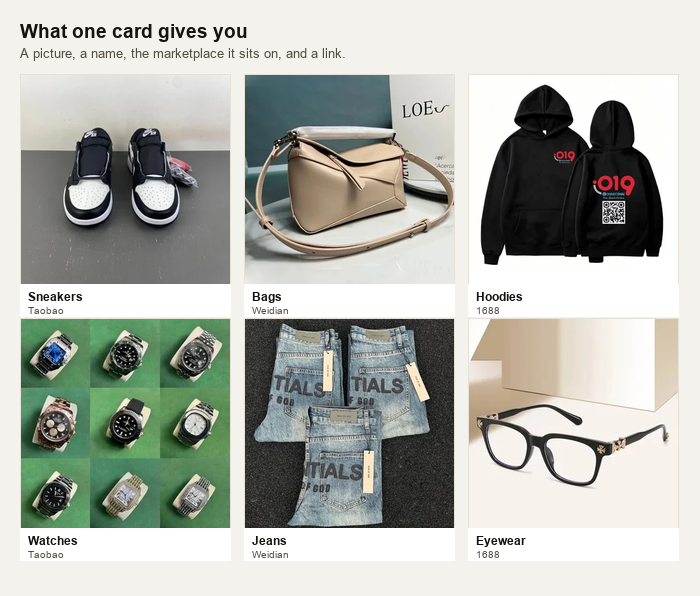
What one card is made of
Four parts, and they are not equally useful. The picture sets an expectation and nothing more. The name is usually community shorthand rather than the seller title, so searching for it on the marketplace often fails. The platform badge tells you which buying path applies. The link is the only part the agent needs.
Read in that order, a card takes about five seconds. Most of the work of judging a find happens on the marketplace page the link opens, not on the card.
Why bother
Why a Spreadsheet beats searching the marketplaces yourself
A finds catalogue gives you a category and a usable link before you know which seller or search phrase to try. These are the practical reasons to start here.
The listings are in Chinese
Translation helps with a listing, but size, material and option names still need a careful check against the seller’s pictures and chart.
The same item has many listings
Similar pictures can lead to different products. Compare the exact option and seller details after opening a catalogue link.
Marketplace photos are not evidence
Look for buyer photographs of the exact version. A catalogue image is a discovery aid; it is not proof that the pictured item has been inspected.
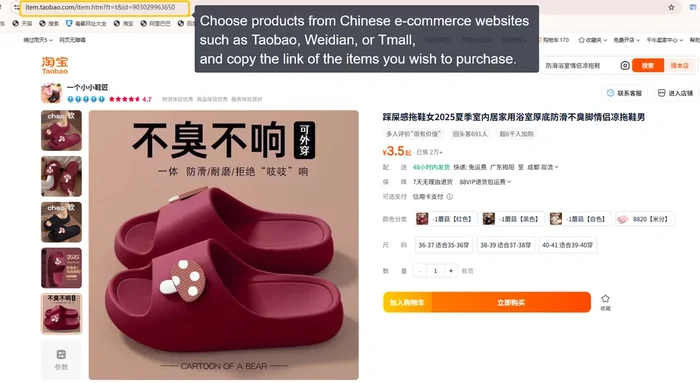
You need a link, not a screenshot
A working source URL lets the agent identify the listing. Save the original link together with the colour, size and any written request.
From a card to your door
The full path, with the part you control marked. Everything before stage three is reversible at no cost. After stage three you have paid for goods.
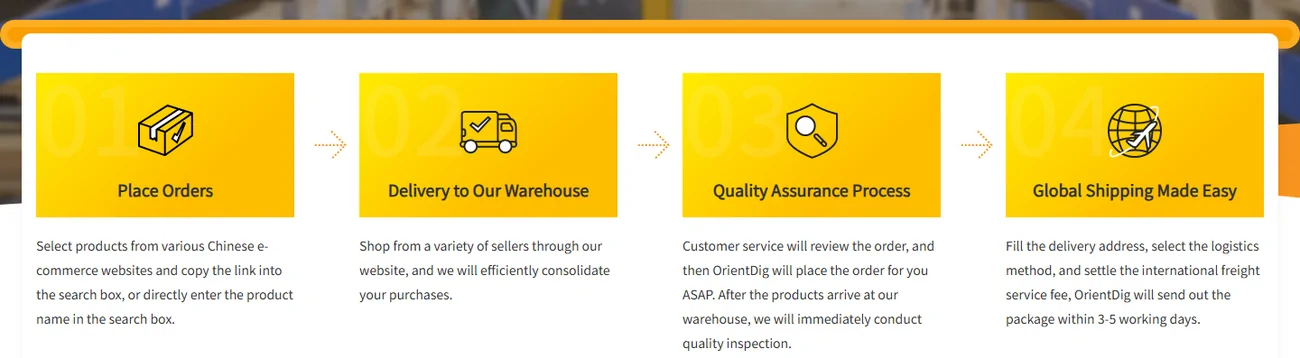
Pick the card
Browse a category and open the ones that look right. Nothing has cost anything yet.
Open the marketplace page
This is where judging happens: seller history, buyer photos, the price band, the size chart. The card cannot tell you any of it.
Hand the link to OrientDig
Paste it into the search box on the official site. The agent reviews the order and buys from the seller.
Wait for the QC photos
The only time you see the real object before it ships. Look at it properly, because after this the box is sealed.
Pick a line and pay the freight
You choose the courier and settle the international freight fee. What it costs depends on weight, size and destination.
Browse the catalogue
Categories are the sane entry point, because seeing twenty listings in a category teaches you the price band faster than any guide can describe it. The full set of categories, with our note on where a wrong guess costs most, is on the categories page.
Choosing a Spreadsheet site
Look for working seller links, recognisable categories and enough information to find the same item again. A useful guide explains its role, dates changing prices or policy notes and makes the order and support steps easy to reach.
Do not treat placement in a catalogue as a seller guarantee. Open the source and compare the exact variant, measurements and recent buyer evidence. Check the seller behind a find.