The method
Judging a find before you order it
Use seller history, photo evidence, price and handling needs as a checklist. The score below reflects your answers, not a tested prediction of quality or delivery. Verify any weak point before ordering.
None of this is exotic and none of it requires reading Chinese. It takes about two minutes per item on the marketplace page the find links to. If you have not picked anything yet, start on the finds guide; if you already have, the ordering walkthrough is what comes next.
Score the find you are looking at
Answer for the item in front of you. The output changes as you change the answers, and it tells you which single thing to fix rather than just giving you a number.
Check one: how much history does the seller have
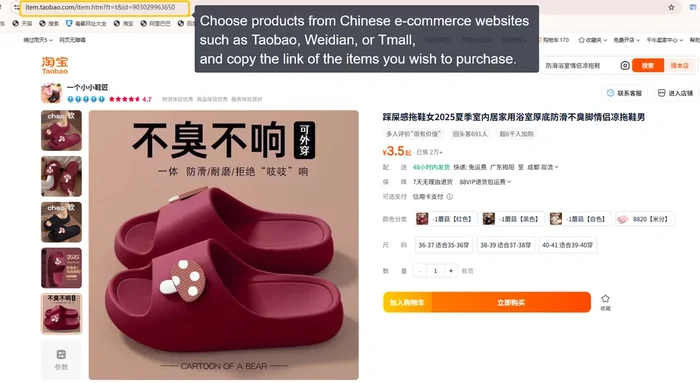
Open the marketplace listing and check how long the shop has traded, its recent feedback and reviews for this exact item. A history of relevant orders gives you more evidence to read; it does not guarantee your order.
Read the detail behind a rating: which variant was bought, when the review was posted and whether it includes clear photographs. A rating average or follower count alone is not enough.
Check two: what photos exist of this exact item
Studio images tell you what the item is supposed to look like. Buyer photos, posted in the reviews, tell you what turned up in somebody else's parcel. The gap between those two is the entire risk of this kind of shopping.
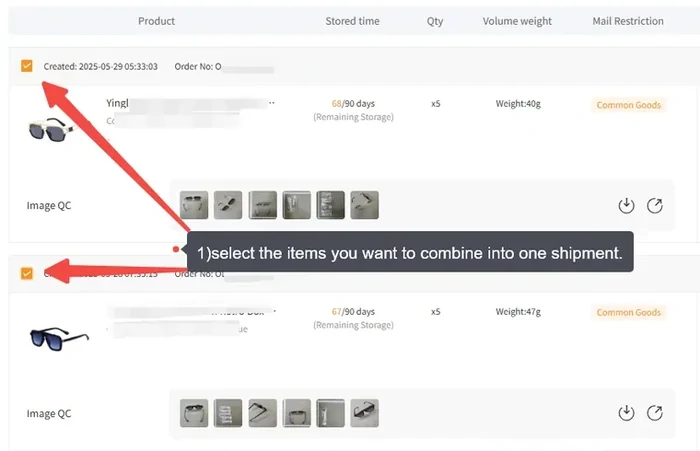
If there are no buyer photos at all, you are not out of options: OrientDig states it provides free HD QC pictures once goods reach its warehouse. That moves your look at the real item later in the process, after you have paid for the goods but before you pay to fly them. Knowing that is the difference between a bad surprise and a manageable one.
Check three: does the price make sense
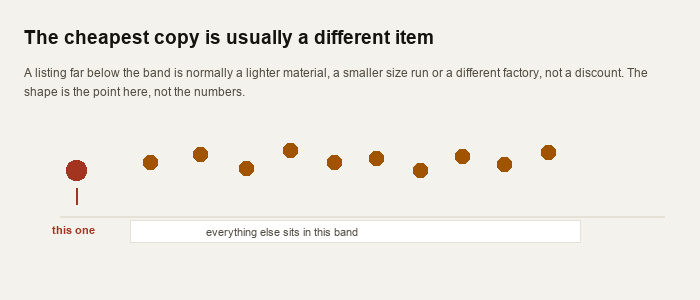
Open three or four listings of the same item and look at the spread. Most of them will sit in a band. One will be far below it, and that one is almost never a bargain: it is a lighter material, a shorter size run or a different factory using the same photos.
Being above the band is much less worrying than being below it. Paying a little more to a shop with a real history is usually the cheapest decision on this page.
Reading the score
What to do with each verdict
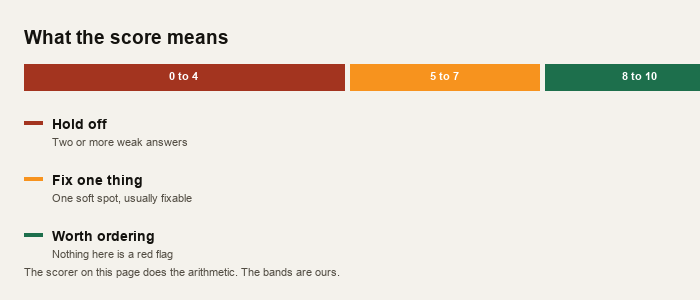
The scorer gives you a band, not an instruction. Here is what each band should actually make you do.
Worth ordering
Nothing here is a red flag. Order it, then treat the QC photos as the real check rather than a formality. Look at seams, hardware and anything the listing made a claim about.
Fix the weak spot first
One soft answer is usually closable in five minutes. No buyer photos means asking for extra QC images later. A thin seller history means checking whether another shop sells the same item.
Find another listing
Two or more weak answers is not bad luck, it is a pattern. The same item almost always exists under a better shop, and looking for it costs nothing but a few minutes.
Handling risk never goes away
A ten out of ten pair of boots is still heavy and still sized short. The score tells you about the listing, not about whether the category suits a first order.
Check four: what will it cost to handle
This is the check people skip, and it is the one that turns a small mistake into an expensive one. Weight decides freight. Bulk decides freight too, because lines charge on volume when volume is the larger number. Strict sizing decides whether a mistake is recoverable at all.
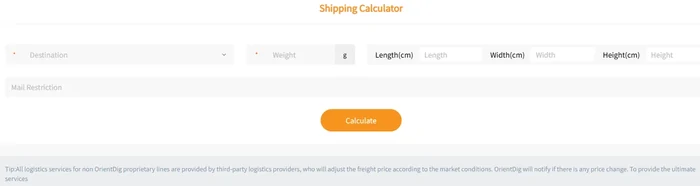
The official estimator will price a parcel for you before you own anything. It asks for a destination and a weight, with dimensions optional, and it carries its own warning that non proprietary lines are run by third party providers who adjust prices with the market.
Questions people ask about judging finds
Short answers. Anything involving your actual order belongs with OrientDig, not with us.
Is a higher score a guarantee?
No. It is a way of slowing yourself down at the moment when slowing down is cheap. The weights are our editorial judgement for first time buyers, not a measurement, and no agent publishes anything comparable.
What if the find has no marketplace link, only a photo?
Then it is not usable yet. The agent works from a URL. Either find the same item on a finds page that carries a link, or treat the photo as inspiration and search for the item yourself.
The seller has no reviews at all. Is that always bad?
Not always, but it removes your best evidence. If you order anyway, keep the order small and lean harder on the QC photos before you pay for freight.
Can I ask for more QC photos?
OrientDig describes free HD QC pictures as part of the service. Whether extra angles are available, and on what terms, is a question for its support rather than for us. The help page covers where to ask.
Does a higher price mean better quality?
Not reliably. What it correlates with is a seller who is not competing on being the cheapest, which is a slightly different and more useful thing.